


Executive Summary
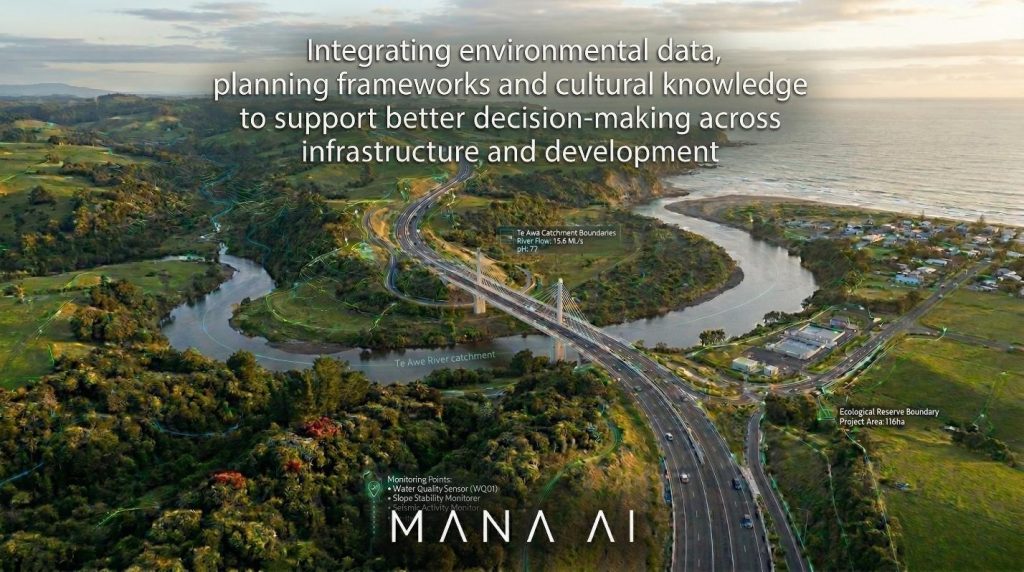
Mana Review AI is a decision-support platform designed to assist councils, iwi, hapū, planners, and engineering consultancies navigating cultural impact assessments, environmental monitoring, and resource consent processes.
Developed from practical experience in environmental governance, the platform integrates statutory planning frameworks with Mātauranga Māori. The goal is to improve collaboration between councils, infrastructure developers, consultants, and mana whenua while making complex environmental information more accessible.
Mana Review AI demonstrates how AI can support culturally informed environmental governance while improving efficiency for projects requiring environmental approvals.
Challenge / Situational Overview
Industry Context
Environmental planning and infrastructure development in Aotearoa New Zealand often requires collaboration between multiple stakeholders, including:
- Local and regional councils
- Iwi and hapū authorities
- Planning consultancies
- Engineering firms and infrastructure developers
These projects require the integration of:
- Planning regulations and policy
- Environmental monitoring data
- Cultural values and Mātauranga Māori
- Consent documentation and impact assessments
However, this information is often fragmented across multiple systems and organisations.
Technical Problem
- Fragmented information systems – planning provisions, environmental monitoring data, and cultural reports are often stored separately.
- Limited digital tools for cultural analysis – most planning tools do not incorporate Mātauranga Māori frameworks or cultural indicators.
Complex consent processes – preparing and interpreting cultural impact information can be time-consuming for councils, applicants, and iwi authorities. - Accessibility barriers – many iwi and hapū organisations lack access to tools that support environmental analysis and reporting.
Stakes
Improving these processes is critical to support better environmental outcomes, enable meaningful engagement with iwi and hapū, and reduce delays in consent processes.
Solution Approach
Technology Stack
Mana Review AI combines several technologies:
- Large Language Models (LLMs) for document interpretation and summarisation
- Retrieval-augmented generation (RAG) referencing planning documents and environmental reports
- Knowledge graph structures linking policy, monitoring data, and cultural indicators
- Structured cultural frameworks based on Mātauranga Māori environmental indicators
Implementation
The platform focuses on three functional areas:
Cultural Impact Support
AI-assisted structuring of cultural impact assessment information to help identify environmental and cultural effects.
Environmental Monitoring
Integration of monitoring data with cultural indicators to support interpretation of ecological trends.
Policy and Plan Analysis
AI-assisted interpretation of planning provisions to help users understand regulatory requirements and environmental implications.
Human oversight remains central to ensure outputs are reviewed by practitioners and knowledge holders.
Innovation Factor
Mana Review AI introduces a new category of environmental decision-support technology by integrating:
- Regulatory planning frameworks
- Environmental monitoring data
- Indigenous environmental knowledge
within a single AI-assisted system.
The platform focuses on improving collaboration between councils and mana whenua rather than automating decision-making.
Outcomes & Impact
Early Outcomes
Initial engagement with iwi organisations and local government practitioners suggests the platform can support:
- Improved accessibility to environmental planning information
- Stronger integration of Mātauranga Māori in environmental governance
- More efficient preparation of cultural impact assessments
- Clearer interpretation of environmental monitoring data
Broader Benefits
- Improved Collaboration
- Supports clearer communication between councils, iwi, planners, and engineering consultancies involved in infrastructure and development projects.
- Environmental Governance Innovation
- Demonstrates how AI can support culturally informed environmental decision-making across planning and infrastructure sectors.
- Efficiency for Infrastructure Projects
- Helps planners and consultants interpret environmental requirements earlier in project development, reducing delays and improving engagement with mana whenua.
Key Learnings & Future Applications
Technical Insights
- Environmental governance requires integration of regulatory, ecological, and cultural knowledge systems.
- AI tools are most effective as decision-support systems rather than automated decision-makers.
- Cultural frameworks must be embedded in system design.
Industry Implications
AI could support environmental governance in areas such as:
- Environmental monitoring interpretation
- Planning and consent analysis
- Cultural impact assessment preparation
- Collaborative environmental decision-making.
Next Steps
Future development will focus on:
- Expanding environmental monitoring capabilities
- Supporting additional consent workflows
- Strengthening collaboration tools for councils and mana whenua.
Mana Review AI | Tui Shortland, Director, Hoterene Ltd | tetuihoterene@gmail.com